501-918-3025
calsfoundation@cals.org
calsfoundation@cals.org
The bronze statue of Icarus and Daedalus has been part of the Central Arkansas Library System’s art collection since 1967. It was created in 1965 by Philadelphia artist Evangelos Frudakis (1921–2019) and donated to CALS in 1967 by Raymond Rebsamen, a businessman active in downtown revitalization and a leader of the Urban Progress Association. The bronze statue illustrates the Greek myth of Icarus and Daedalus warning of the dangers of excessive pride.

On March 9, 1967, J. N. Heiskell, then the chairman of the library’s Board of Trustees, presided over a groundbreaking ceremony for a landscaped plaza north of the old Little Rock Public Library located on Louisiana Street. Also there was Fred W. Parris, chairman of the Little Rock Housing Authority (which covered most of the cost of the plaza’s construction, with some help from the Friends of the Library—an example of a public/private partnership), and Raymond Rebsamen, who donated $20,000 for the public artwork to be showcased in the plaza.
Library Plaza was seventy-eight feet long, and its centerpiece was to be a sculpture of Daedalus and Icarus, the famous characters from Greek mythology. In the sculpture, they were depicted rising in a spiral from the plaza’s pool. Daedalus, the father, attempts to restrain Icarus, his son, from flying toward the sun. In the myth, Icarus’s wings were made from bird feathers and wax. He did not heed his father’s advice, and he drowned in the Icarian Sea after he flew so near to the sun that the wax binding of his wings melted.
Little Rock Mayor Martin Borchert attended the groundbreaking ceremony and made comments that feel relevant today as we consider the future of our downtown:
“To maintain a viable downtown area…a city must do more than build a collection of steel, concrete and brick. It must…be convenient, interesting, and most of all…attractive. The Library Plaza will be an inspiration to other concerns as they contemplate new construction in downtown Little Rock.” Heiskell proclaimed that the sculpture would be a reminder of the civic spirt of Raymond Rebsamen, who was praised as an instrumental figure in the revitalization of Little Rock’s central business district.
A few months after that groundbreaking ceremony, Evangelos Frudakis wrote a letter to Margaret Burkhead, who led the Little Rock Public Library from 1957 until 1969. He told her that the sculpture was ready for delivery, and he explained the vision behind his artwork: “I have tried to portray the moment, Icarus who being forewarned by his father, tosses caution to the wind. In this new and exciting experience he has only the desire to fulfill the moment, upward he soars, his father’s futile efforts cannot save him.”
The statue was installed as part of a fountain display at the second Main Library, which was built on the same site as the original Carnegie library on Louisiana and was fully completed in 1964 with the addition of the garden plaza area. (Read more here about the history of CALS.)

When the Library Plaza was complete, the fifteen-foot-tall sculpture was delivered and installed.

On October 30, 1967, Adolphine Fletcher Terry, who had served on the board of the Little Rock Public Library from 1926 until 1965, wrote a letter to Raymond Rebsamen. Referring to the Icarus and Daedalus statue, she wrote: “I wish to express my personal thanks to you not only for this expression of your generosity but for your many, many other services; it was mentioned more than once that the entire country knows what you have done in the way of rehabilitating a community.”
In the years after Library Plaza was built on Louisiana Street, the Little Rock Public Library became the Central Arkansas Library System, the Main Library moved a few blocks down the road to Rock Street, and various library directors served, including Bobby Roberts, who said, “When I first saw the sculpture, I thought it was the finest piece of public art in the state, and I still think that is the case.”
When the Main Library opened in the River Market area of downtown in 1997, the statue was placed in the fountain in the garden area outside of the Darragh Center.
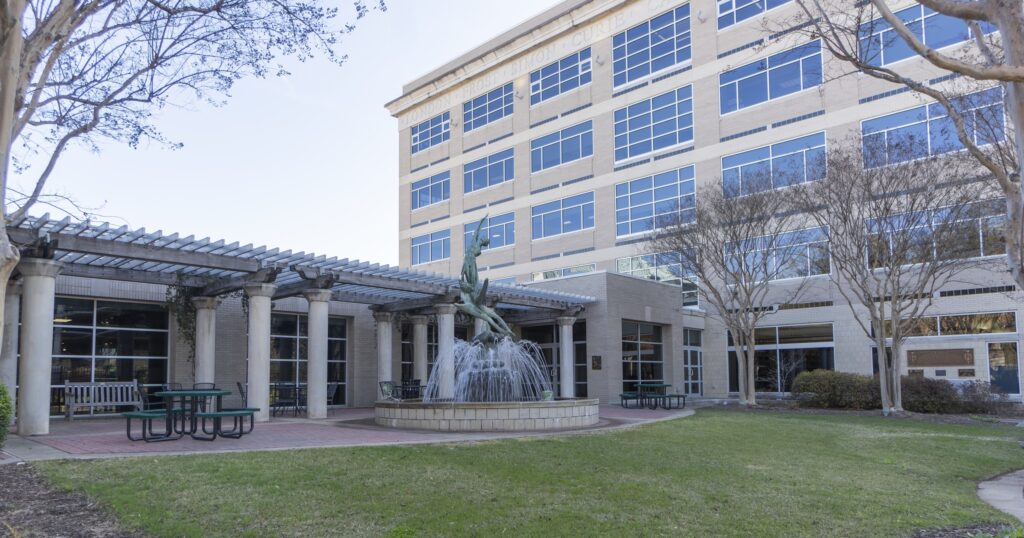
In 2003, Daedalus and Icarus was added to the Smithsonian American Art Museum’s national sculpture database.
On December 6, 2006, Evangelos Frudakis wrote CALS Butler Center Art Administrator Reita Walker Miller to express his thanks for sharing a photo of the sculpture and fountain in its new location in the courtyard behind the Main Library, which he wrote, “looks very beautiful,” also noting that he considered the “Icarus-Daedalus fountain a major artwork.”
Frudakis died in 2019, before he could learn of Daedalus and Icarus’s next move—from the back courtyard to the front of the newly renovated Main Library, where it was installed on November 4, 2025, after being removed and put in storage for a time during renovations at the Main Library.

When it returned to Library Square, Methods and Materials, a fine-art moving company from Chicago, placed it on a new pedestal in a landscaped greenspace in the parking lot in front of Main. CALS’s Director of Facilities and Operations Gonzalo Hernandez Jr. and the CALS Maintenance Department were instrumental in getting the statue moved and reinstalled.


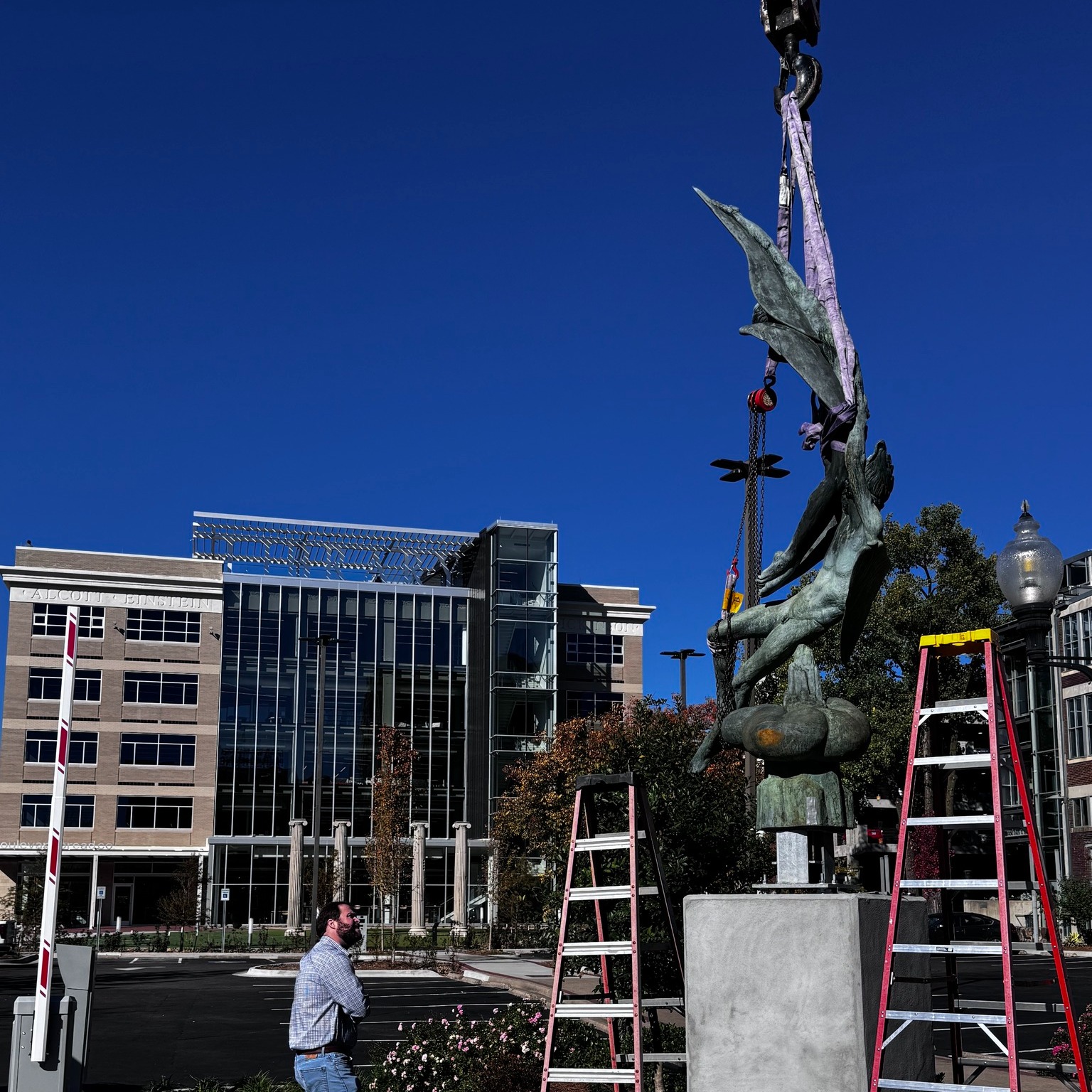


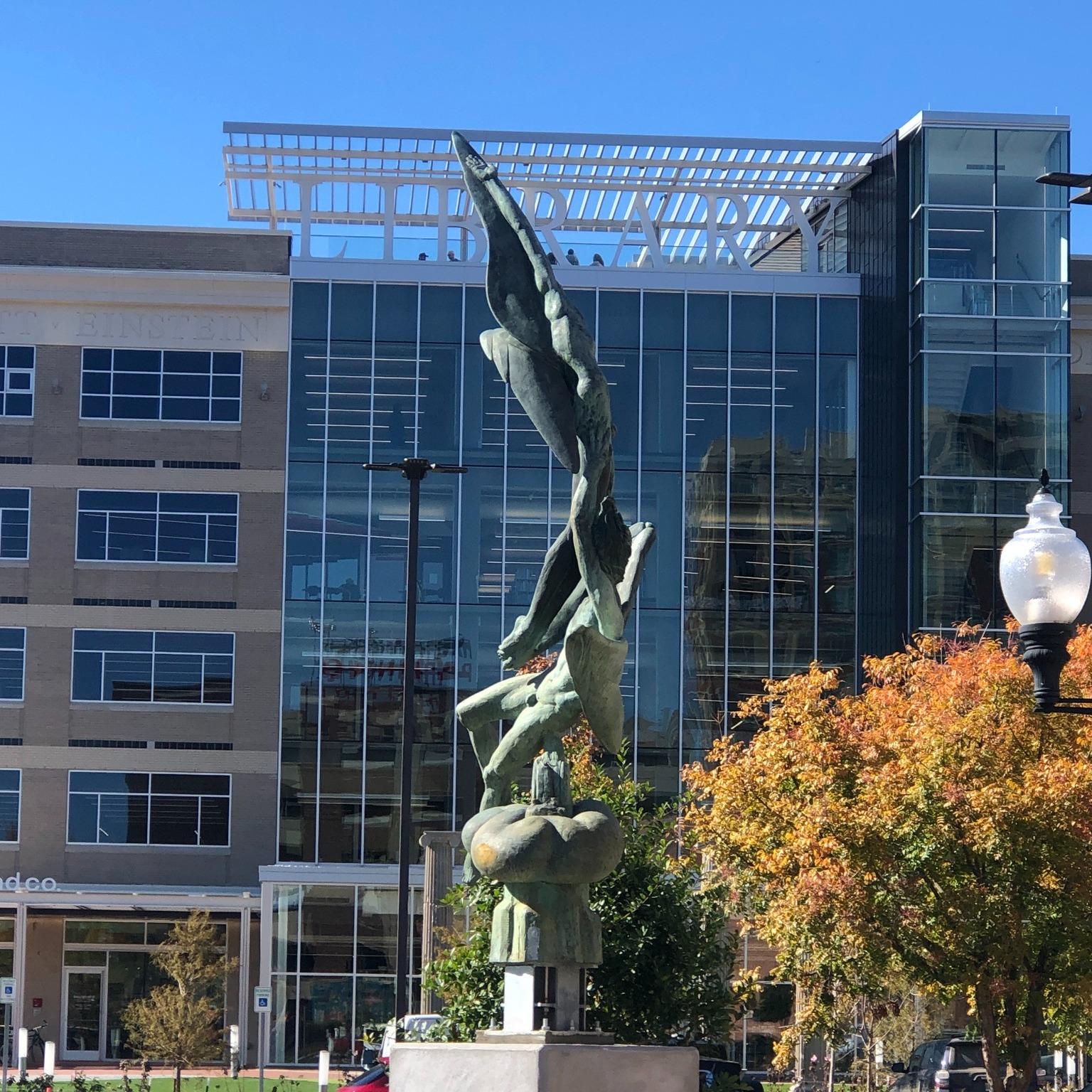
A dedication ceremony was held in December 2025 with the CALS Board of Trustees and heirs of the original donor. Mary Wohlleb, granddaughter of Raymond Rebsamen, was on hand with her husband Jim and Rebsamen’s great-grandchild Ariana Remmel to welcome the statue to its new home.


By CALS Chief Development Officer Eliza Borné and CALS Art Administrator Colin Thompson