501-918-3025
calsfoundation@cals.org
calsfoundation@cals.org
A broken relationship and the death of a great-uncle led to my move from Little Rock to Chicago, Illinois. I didn’t last a year in the city.
My grandmother’s eldest sister needed someone to assist her in daily errands and routines. She also had a dental procedure scheduled, and her fear of dentists was the primary reason for my arrival in Chicago.
My great-aunt didn’t want me to work outside the house. She did want me to escort her twice a week to Arlington Racetrack so that she could “play the ponies.” I was given one hundred dollars to gamble for each trip. I stopped taking her money, though, because I didn’t win, and I thought it was because I was playing with someone else’s money. I felt guilty for losing her money. Her grandmother had owned a horse while living in Morrilton, Arkansas, and the horse was white. Betting only on white horses in the races didn’t improve my odds of winning, though. I never saw her collect her money, but I suspected she waited until our return visit and collected her winnings when we first arrived.
Gambling was her leisure income to spend however she chose. I enjoyed watching her excitement for the races. After her dental procedure, I told her I wanted to find a job. She discouraged me. I have worked since the age of twelve and enjoyed making and spending my own money. When I decided to return to Little Rock, she was disappointed but understood my decision. She also had a friend that she could ride with to the racetrack.
A phone call with my godmother informing her of my decision to return to Little Rock led her to tell me there was a job that would be a good fit for me. It was at Joseph Pfeifer Kiwanis Camp (which was established in the 1920s in Ferndale), and it included “living space.” Raised in the “south end” neighborhood of Little Rock (see this blog post), I had limited experience camping, but I had I lived for eight weeks one summer on Mount Magazine working for the Youth Conservation Corps (see this blog post). I preferred the night sounds of the city to the night sounds of an area with more wildlife than people.
My mother strongly suggested that I wear a skirt for my interview. She had no experience with camping and could not have suggested a more inappropriate outfit. My friends Jeff and Jackie drove me to the interview. Rain had left puddles around the office area where the interview took place, and the brief tour highlighting other buildings left my shoes muddy.
I got the job and began my adventure with Pfeifer Camp. I started out as a counselor for kids age nine to thirteen. I couldn’t tell you the names of any of my first group of campers, but I can tell you they taught me as much as I taught them. This was an alternative school setting for “at-risk” children. I recognized myself in each of them and understood that the label could have easily been mine when I was in elementary school.
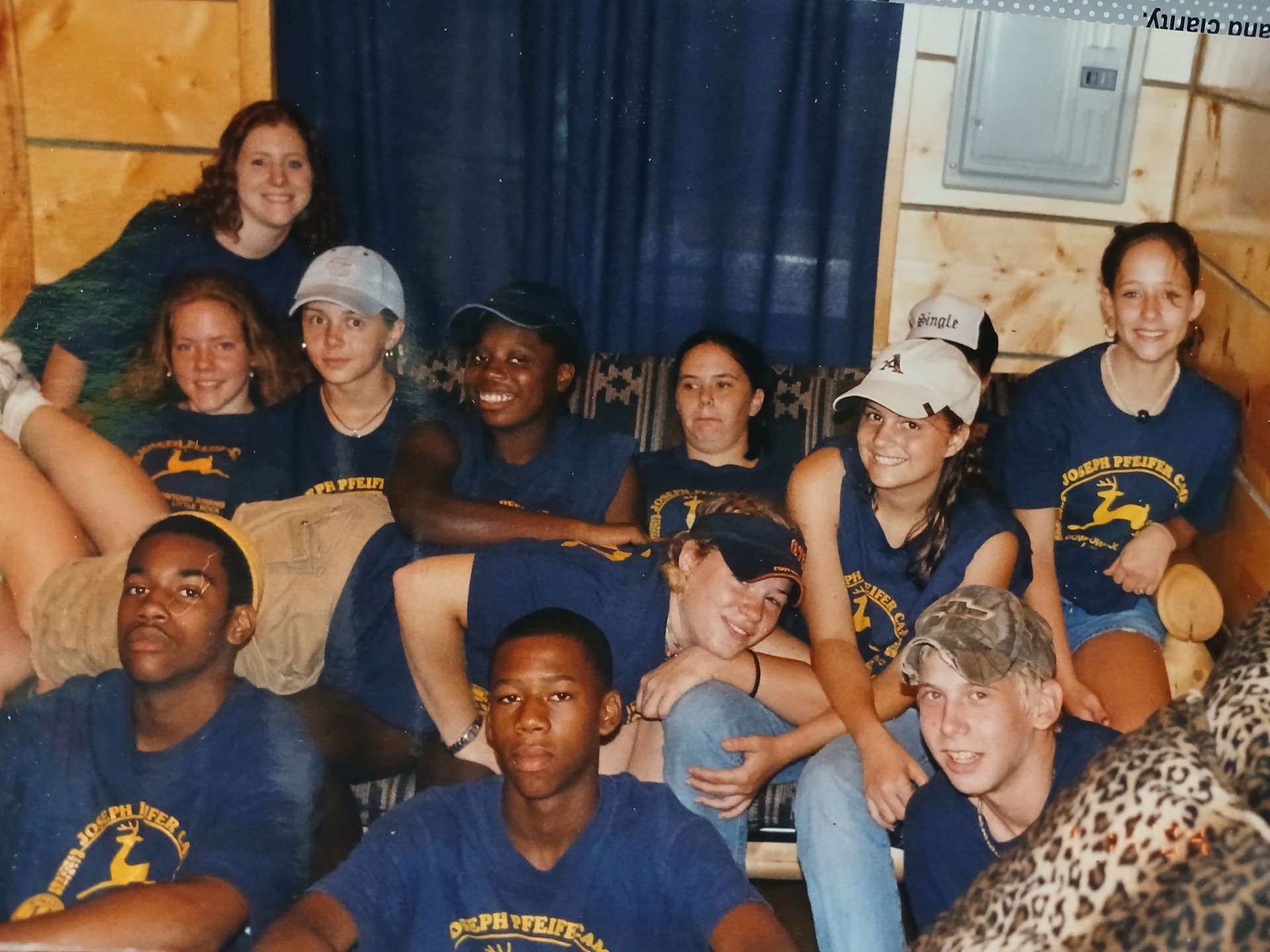
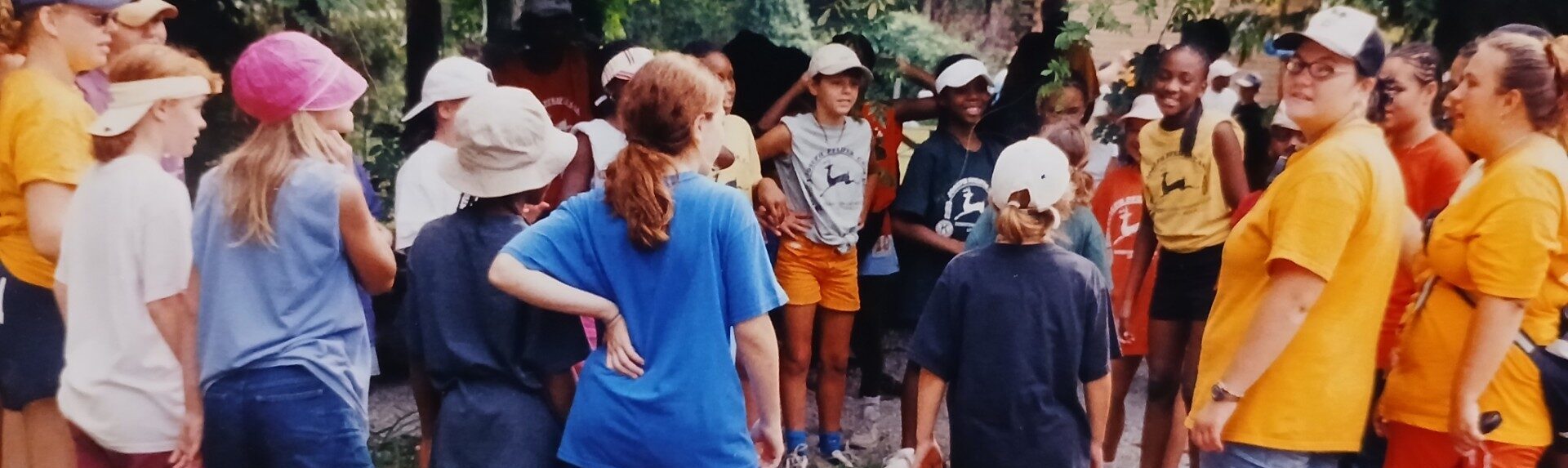
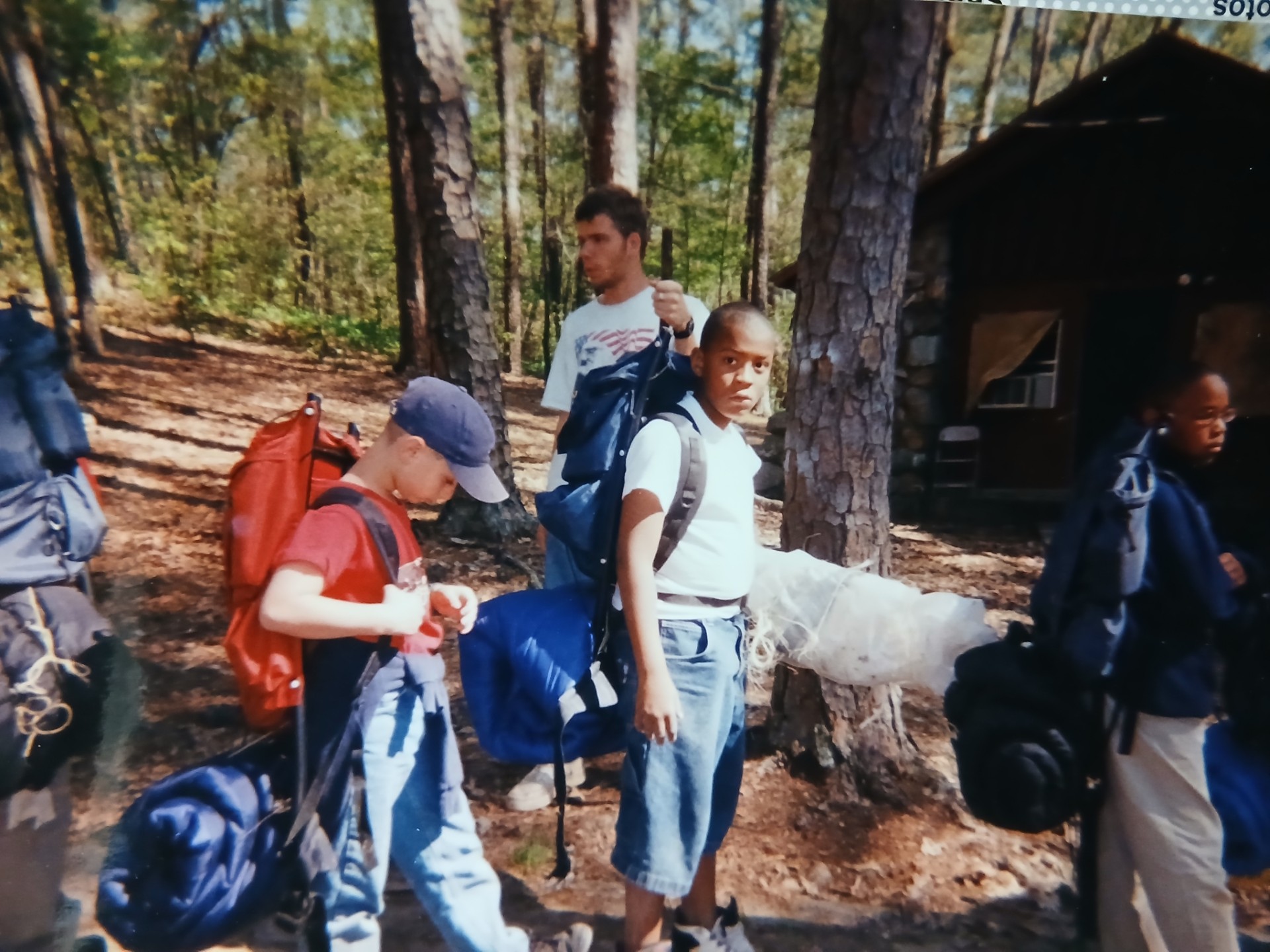
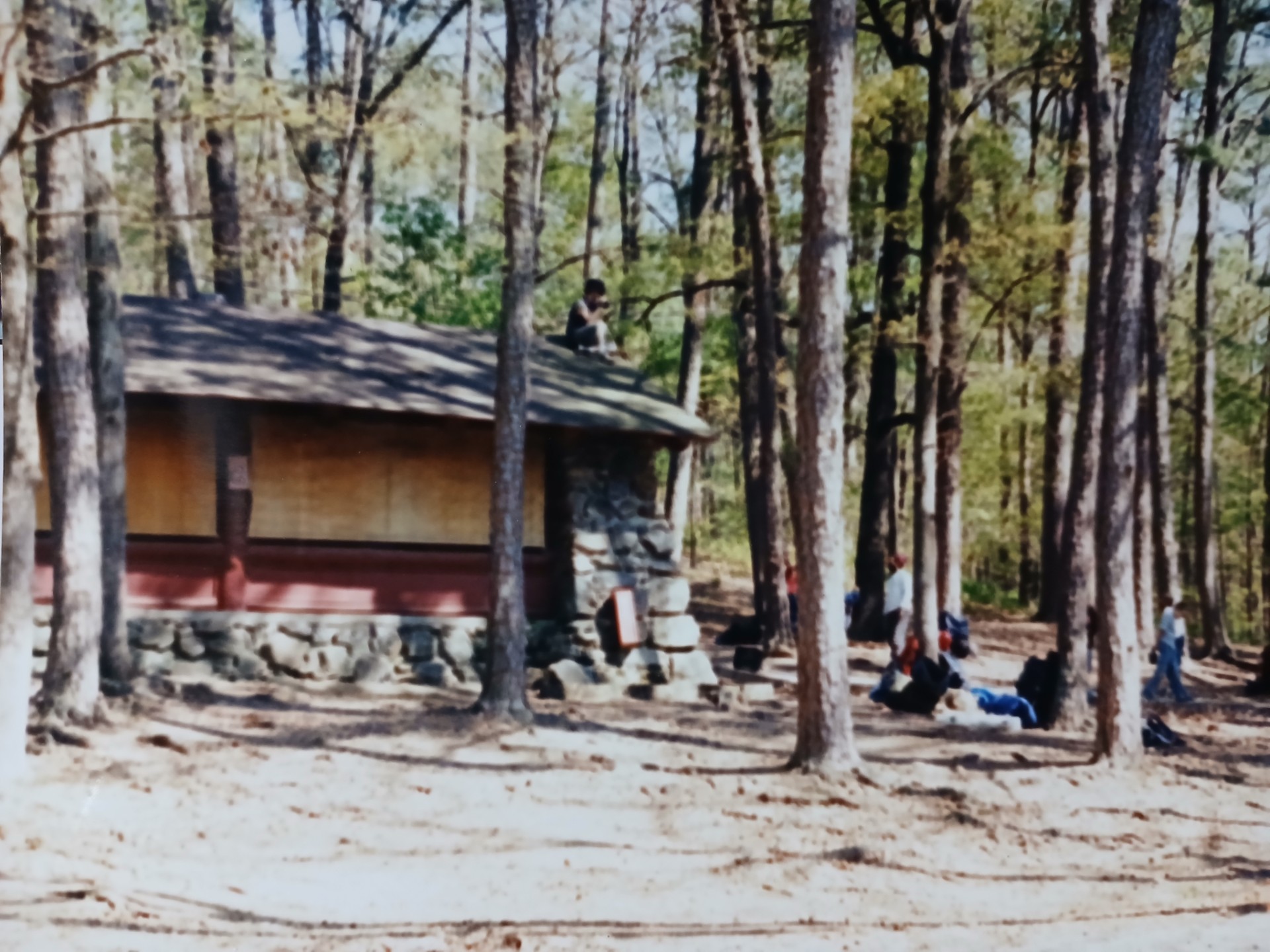


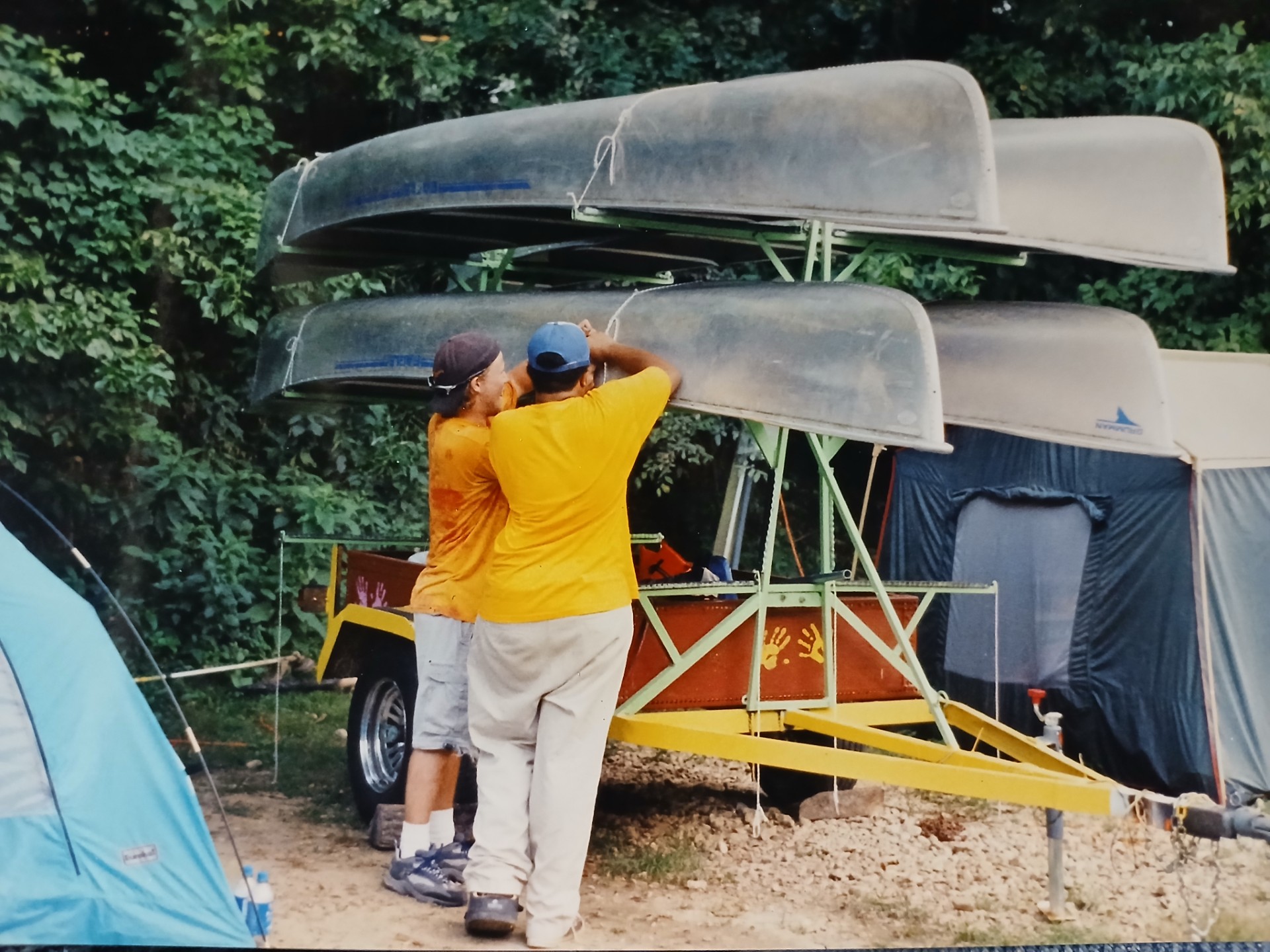
Sleeping outside in the woods once a week was an adventure for me as well as for them. I didn’t sleep for fear some animal might attack or some student would run away—although the darkness prevented most from trying that. One student decided she didn’t want to be there anymore, and when we returned to our cabins, she decided to run down Ferndale Cutoff with the intention of returning to her Granite Mountain neighborhood. She was surprised that the “fat” counselor caught her. I’ve seen her as an adult. She has multiple children and grandchildren and proudly shows her photos. She shared that some of the things she learned at camp were useful in parenting. Her children had to “hug trees” when they were upset.
After a couple of years, I would no longer be a counselor but stepped into the role of “feeding the children.” I informed my supervisors that I was not a cook, but I would feed the children. Feeding one hundred people three meals a day was the task. I was told that children and adults would eat the same meals. Steak was on the menu at least once a month. I was told I was blowing through the budget for food, but no one complained about the food choices.
Every child was recognized if their birthday occurred while they were at camp. They got the first slice of cake. One student who had a criminal record as a young adult saw me in a convenience store one day. He hugged me and thanked me. I was the first person to ever give him a cake on his birthday. Although he still made some poor decisions, his time at camp had strengthened his resolve to improve.
The students were at camp for a period of six weeks. They were dropped off on Sunday afternoon and picked up on Friday afternoon. One student seemed to always be the last child picked up each Friday during her six-week stay. Near the end of the session, her mother exited a vehicle and began to angrily tell the child that she didn’t have to pick her up and finding a ride to come get her was too much of a hassle. I immediately was restrained by my supervisor because I had every intention of beating that mother’s behind because of how she approached her daughter. Her child was in eighty-eight acres of a safe place, learning new methods of expressing her emotions while developing social skills. That mother’s complaint about finding a ride to pick up her child at the end of the week was a trigger for me. She had no complaints when dropping the child off each Sunday. Observing the child retreat emotionally from her mother’s statement was enough for me to try to “teach her mother” to think about what she said. I think of that child often.
The staff were required to meet after the last child exited camp to discuss the week’s successes and anticipate what improvements were needed for the next week. I referred to this time as “mandatory socialization.” In retrospect, it was useful, but I was in need of a break after five and a half days looking at the same faces, and I rebelled against this mandated meeting. The meetings were sometimes held in social settings and included meals. The effects of those meetings were to simulate family dynamics. The result of those meetings was lifetime membership of the Pfeifer Camp family and a forever connection to every child who visited the camp for classes, summer camp, honor camp, or counselor training.

***
If you have camp memories, you can preserve them by digitizing your photos at the DIY Memory Lab. More info here.
By Rhonda Stewart, genealogy and local history specialist for the Central Arkansas Library System’s Butler Center for Arkansas Studies, housed in the CALS Bobby L. Roberts Library of Arkansas History & Art