501-918-3025
calsfoundation@cals.org
calsfoundation@cals.org
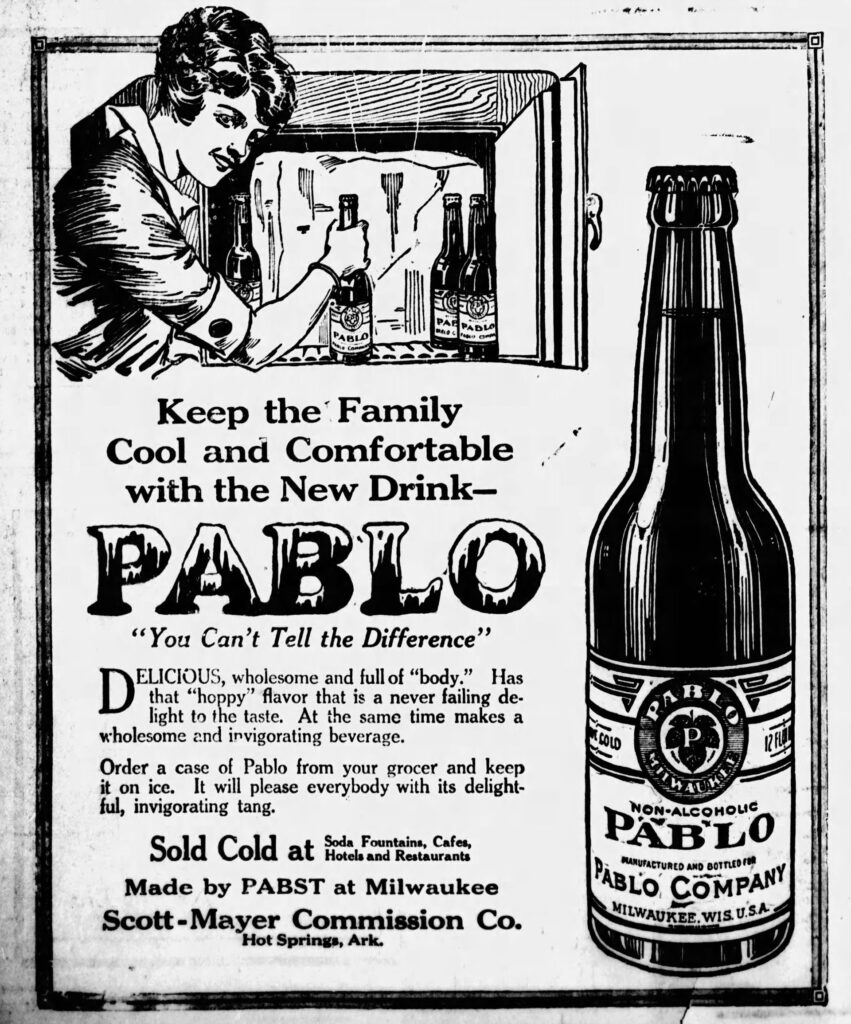
Pablo was a non-alcoholic drink created by Pabst Brewing Company in 1916. The company created the drink at a time when the temperance movement was gaining widespread support in the country. It was only a few years later that the Eighteenth Amendment to the U.S. Constitution, which outlawed alcoholic beverages, was passed. Prohibition lasted until 1933 when it was repealed via the Twenty-First Amendment to the U.S. Constitution.
This bottle-shaped car promoted Pablo, Pabst’s “Happy HOPPY Drink,” in Hot Springs, circa 1917. (Interestingly, non-alcoholic “hoppy” drinks, along with craft mocktails, have had a resurgence in popularity in recent years.)

Before electrical refrigeration became common, most people used ice boxes to keep perishable foods cold. (Read more about them here from the Smithsonian National Museum of American History.) Ice boxes were usually made of wood and lined with tin or zinc. The walls were hollow and filled with insulation. A large block of ice was placed inside the box and as the ice melted, cool air circulated down to the shelves below.

Below is a newspaper advertisement for Pablo. Note the ice box.
Most towns around the country, including in Arkansas, had plants that produced ice for their local communities. People bought blocks of ice, usually weighing between 25 and 100 pounds, and had them delivered via horse and wagon, and later by trucks, to their homes. The deliveries often occurred daily because the ice melted fairly quickly. During the latter part of the nineteenth century, ice was the second-most-valuable export for the United States, after cotton. See more ice plants around Arkansas here.
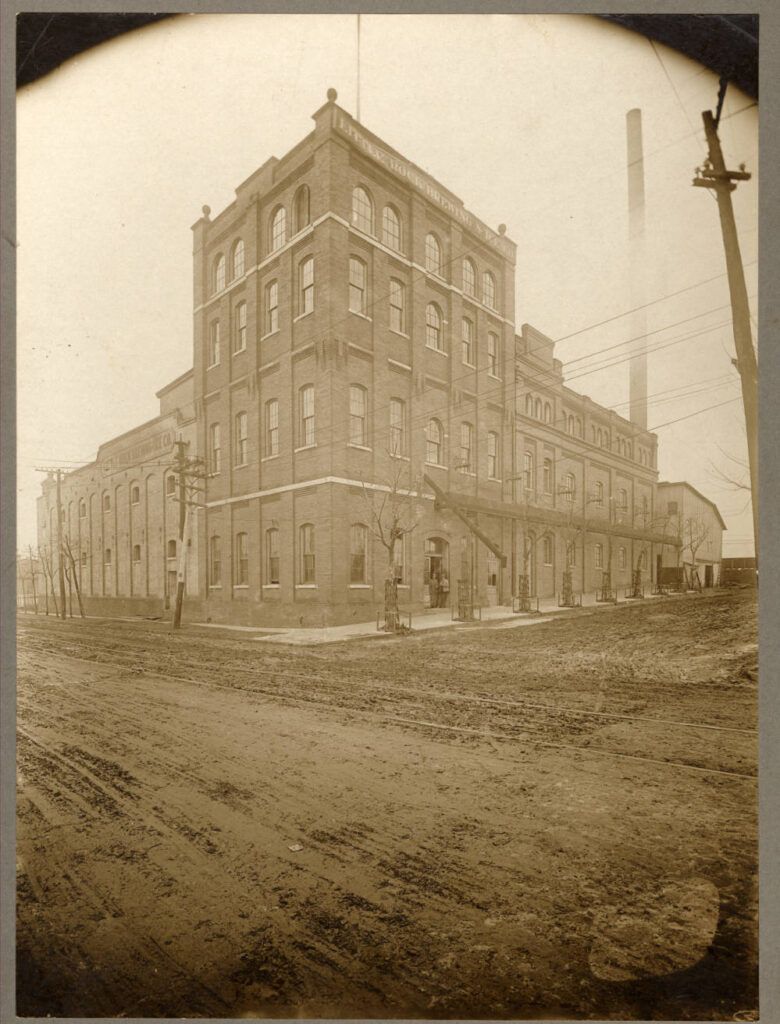
Below is a photograph of the Little Rock Brewing and Ice Company, which was founded in 1898. The building stood on the northwest corner of 2nd and Byrd Streets in Little Rock. For reference, that location is on the grounds of the William J. Clinton Library now. The company stopped producing beer in 1916, when Arkansas adopted prohibition early. The plant continued producing ice until 1925 when the company was dissolved. The building was taken over a few years later by the Southern Ice Company, which operated there until the 1970s. The company shared the building with Safeway for many years during the 1960s and ’70s when Safeway made ice cream there. The building was torn down in the early 1980s.
To see a collection of downtown Little Rock sites past and present, visit our interactive Mapping Downtown Little Rock project.
By Brian Robertson, manager of the Research Services Division at the Butler Center for Arkansas Studies/Bobby L. Roberts Library of Arkansas History & Art